How Do Designers Pair Natural Window Coverings With Modern Flooring for a Cohesive Home?
July 28, 2026Designers pair natural window coverings with modern flooring by paying attention to wood tones, undertones, texture, and natural light, rather than trying to match every finish exactly. That approach creates real visual balance, highlights the architecture of a room, and lets flooring and window treatments play off each other while still fitting the home’s overall style.
Interiors that actually work are built around harmony, not a perfect match. Designers look at the flooring, wall colors, furniture finishes, and how much daylight hits each room before recommending window coverings. When flooring and blinds are treated as part of the same design plan, the result is a space that feels put together, comfortable, and good-looking for years to come.
How do designers coordinate natural window coverings with modern flooring?
Designers coordinate window coverings with flooring by looking at undertones, texture and how much natural light a room gets. Instead of matching materials exactly, they build harmony by picking finishes that work well together.
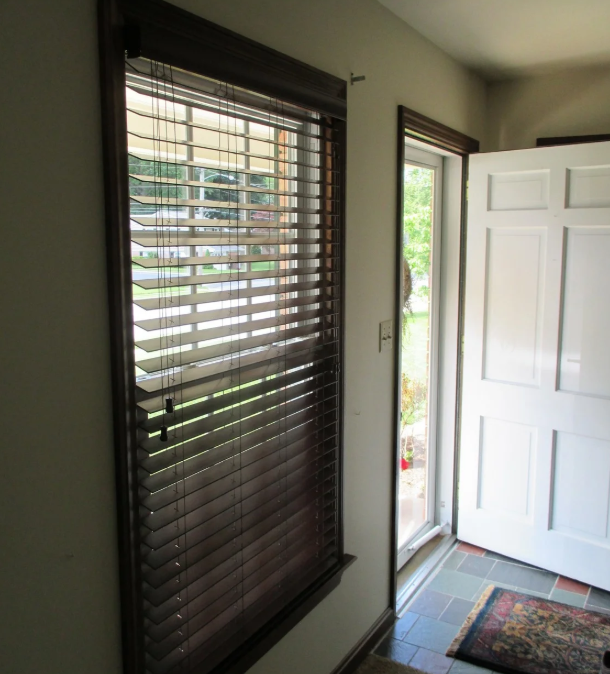
A lot of homeowners searching for wood blinds window treatment ideas assume the blinds need to match the floor exactly. In reality, a bit of contrast in wood tone often looks more refined. Warm hardwood pairs nicely with rich oak or walnut blinds, while cooler gray flooring tends to work better with lighter wood or painted wood blinds that soften the whole palette.
Should wood blinds match your flooring exactly?
No. Wood blinds and flooring don’t need to be an exact match. Pairing complementary tones usually looks more natural and interesting than making everything in the room identical.
When you’re browsing wood blinds and window treatment ideas, it helps to think of your flooring as the foundation of the room. The window coverings support that look rather than compete with it. This layered approach keeps a room from feeling flat and lets the architecture and furniture actually stand out.
What factors help create a cohesive look between flooring and window treatments?
A handful of things affect how well your flooring and window coverings work together.
- Compare the undertones of both materials before making a selection.
- Balance smooth flooring with wood grain or textured blinds to add visual depth.
- Consider how natural sunlight changes the appearance of both finishes during the day.
- Coordinate window coverings with trim, cabinetry and furniture instead of focusing only on the floor.
- Keep the home’s overall design style consistent from one room to another.
Keeping these in mind is what makes wood blinds with window treatment ideas work, since they take in the whole room instead of treating each piece like a separate purchase.
Can natural window coverings make modern flooring look warmer?
Yes. Natural window coverings can soften modern flooring by adding warmth, texture, and balance to the room. This works especially well in homes with luxury vinyl plank, engineered hardwood, or large-format tile that leans cool gray or neutral.
Wood blinds filter sunlight differently than a lot of fabric treatments, which lets natural materials become part of the room’s overall design. When homeowners explore wood blinds and window treatment options, they often find that the right finish ties flooring, furniture, and architectural details together without needing a full renovation.
Why is it beneficial to choose flooring and window coverings together?
Choosing flooring and window coverings at the same time helps you land on a coordinated look and lowers the chances of finishes clashing. It also simplifies the whole decision, since you can compare every material under the same lighting.
At Elizabethtown Flooring, we help homeowners compare flooring samples alongside blinds and other finishes, so each choice supports the next one. Our design team knows how flooring, window treatments, cabinetry, and lighting all work together, which lets us recommend combinations that fit your style and how you actually live.
Does the type of flooring change which wood blinds work best?
Yes. Different flooring materials call for different wood blinds, since every surface reflects light and texture differently. Designers factor in the flooring before recommending window treatments.
Wide-plank hardwood, for instance, tends to pair well with wood blinds that show visible grain for a timeless feel. Luxury vinyl with a bit of texture looks great with clean-lined wood blinds in a complementary finish, while natural stone or tile benefits from warmer wood tones that soften the room.
Can professional design guidance improve the final result?
Yes. Getting professional guidance helps homeowners avoid costly mismatches, and makes sure everything in the room actually works together. Designers look at lighting, room size, wall colors, and existing furniture before recommending anything.
At Elizabethtown Flooring, we work closely with homeowners through the whole selection process, since flooring and window treatments are investments you’ll live with for years. Our showroom carries a wide range of flooring through Flooring America, along with quality blinds and other finishes, so you can compare everything in one place. We also offer Shop-at-Home consultations, so you can see samples in your own lighting before deciding. Paired with professional installation and personal service, this helps create interiors that stay attractive, and functional for years.
Frequently Asked Questions
Do wood blinds work with luxury vinyl plank flooring?
Yes. Wood blinds work well with luxury vinyl plank when the color complements the floor’s undertones. Pairing warm or cool finishes creates a natural balance without needing the blinds to match the floor exactly.
Should every room have the same wood blinds?
Not necessarily. A consistent style throughout the home gives it a sense of flow, but small variations in finish can help each room complement its own flooring, lighting and overall look while still feeling like part of the same home.
Are natural wood blinds suitable for modern homes?
Yes. Natural wood blinds work well in modern homes, since they bring in texture and warmth without overpowering clean architectural lines. They also pair nicely with hardwood, luxury vinyl, laminate and tile flooring.
What should homeowners consider before choosing wood blinds?
Consider your flooring color, wall paint, furniture finishes, natural light, and how the room is used. Looking at these elements together can help you choose wood blinds, and complementary window treatments that feel cohesive and suit the space.
Can flooring and window coverings be selected during the same project?
Yes. Picking both during the same project lets you compare finishes side by side and land on something that actually coordinates. That helps avoid colors that clash and gives you a more polished-looking room.
Conclusion
Designers build cohesive interiors by treating flooring and window coverings as pieces of the same design, not separate purchases. Paying attention to undertones, texture, natural light, and material choice results in rooms that feel balanced, and welcoming.
If you’re exploring wood blinds window treatment ideas, thinking about your flooring from the start makes every decision after that easier. Working with experienced professionals who understand flooring, window treatments, and personalized guidance helps make sure your finished space actually reflects your style and how you live. Whether you’re refreshing one room or planning a full renovation, choosing these features together is what gives a home lasting appeal.