Author: Elizabethtown Flooring
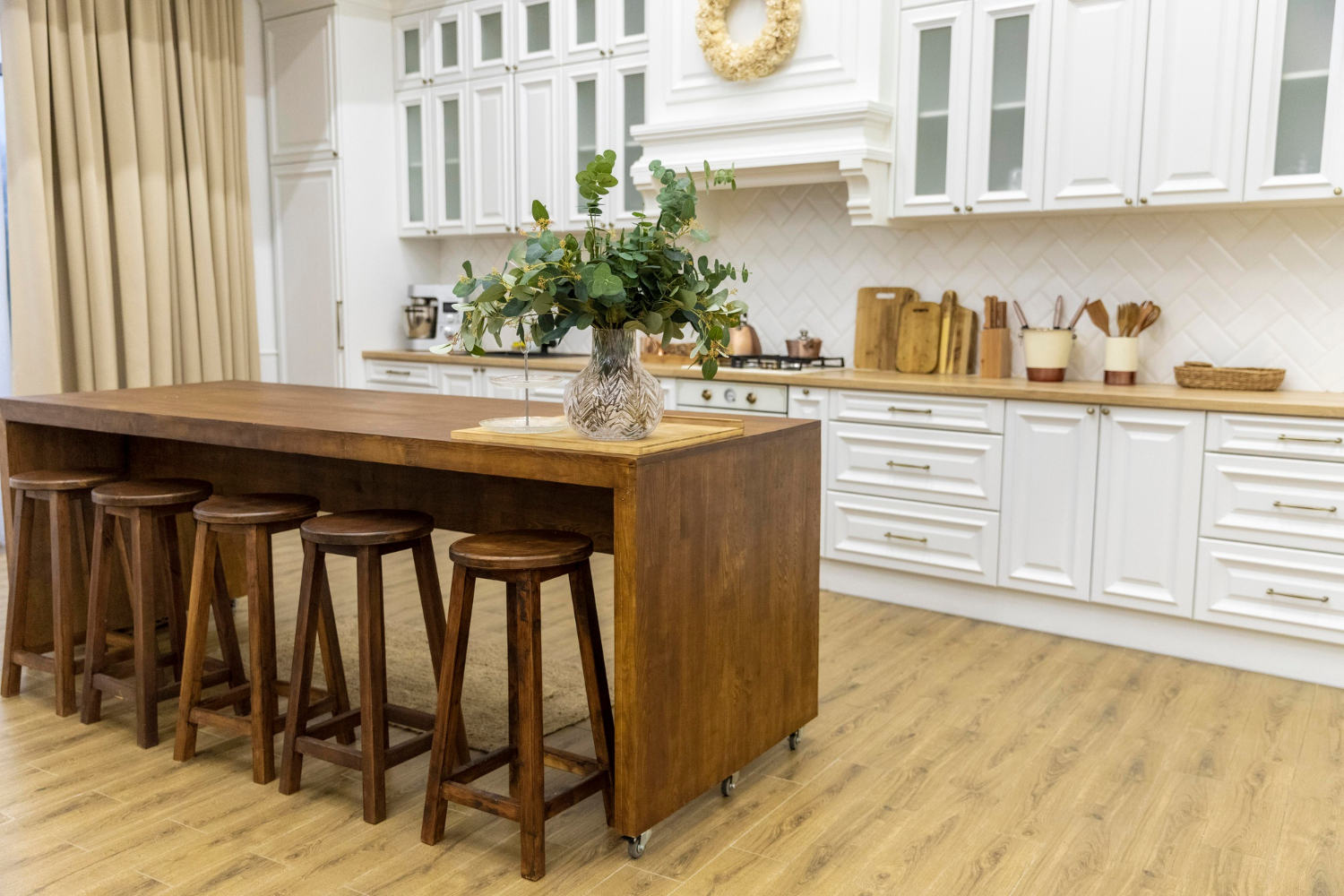
How Do You Match Luxury Vinyl Kitchen Flooring With Your Cabinets and Countertops?
August 29, 2026The best luxury vinyl kitchen flooring ideas start with the surfaces you’re keeping. If your cabinets and countertops aren’t changing, use their colors and undertones to guide your flooring choice. Warm wood-look vinyl often pairs well with cream or white cabinets, while cooler floor tones can complement gray or white countertops.
A general rule is to keep two of the three surfaces, floor, cabinets, and countertop, in the same tonal family and let the third provide contrast. Matching everything exactly tends to flatten the room, while contrasting every surface can feel chaotic, so balance is the real goal. We walk through these pairings with clients regularly, and the same undertone principle holds true whether the kitchen is being fully remodeled or just getting a new floor.
Should Your Vinyl Flooring Match or Contrast Your Cabinets?
Either approach works, but contrast generally creates more visual depth than an exact match. Pairing dark cabinets with a lighter vinyl floor, or light cabinets with a richer wood-look plank, keeps the kitchen from reading as one flat block of color. Matching floor and cabinet tones closely can still work in smaller kitchens, where it makes the space feel larger and less broken up.
Among the most reliable luxury vinyl kitchen flooring ideas is choosing a floor one or two shades darker or lighter than the cabinets rather than an identical tone, since a slight difference reads as intentional design instead of a coincidence.
What Color Vinyl Flooring Works Best With White Cabinets?
Warm mid-tone wood-look vinyl is the most versatile pairing with white cabinets, since it adds warmth without overwhelming a bright space. Honey oak, weathered walnut, and light gray-brown planks all work well because they soften the crispness of white cabinetry rather than competing with it.
Cooler gray-toned vinyl also works if the countertop or backsplash leans cool, such as with white quartz that has gray veining. The key is matching the undertone of the vinyl to the undertone already present in the countertop or backsplash, not just the cabinet color itself.
Does Luxury Vinyl Flooring Work With Quartz or Granite Countertops?
Yes. Luxury vinyl can complement quartz or granite countertops in many colors and patterns. The key is to balance the finishes. If your countertop has noticeable veining or a busy pattern, a simpler vinyl floor can keep the kitchen from looking crowded.
- With busy granite or quartz patterns, choose a simpler, single-tone vinyl plank so the countertop remains the visual focus.
- With plain or solid-color countertops, a wood-grain or textured vinyl floor adds the visual interest the counter lacks.
- With warm granite tones like beige or gold, choose vinyl in matching warm wood tones rather than cool gray.
- With cool quartz tones like white or soft gray, gray-toned or whitewashed vinyl plank keeps the palette consistent.
- Avoid pairing two heavily patterned surfaces, since busy veining and busy wood grain compete rather than complement.
Should Dark Cabinets Be Paired With Light or Dark Vinyl Flooring?
Light vinyl flooring is generally the safer pairing with dark cabinets, since it keeps the kitchen from feeling closed in or heavy. Espresso, black, or deep navy cabinets already anchor the room visually, so a lighter floor in the beige, whitewash, or light gray family balances that weight.
Dark flooring can also work with dark cabinets, especially in kitchens with plenty of natural light. Compare samples in the room before deciding, since lighting can change how dark the finished space feels.
Can You Mix Wood-Look Vinyl Flooring With Stone-Look Countertops?
Yes, mixing wood-look vinyl flooring with stone-look countertops is one of the most common and reliable combinations in kitchen design. The natural texture of wood-look planks softens the coolness of stone surfaces like marble or quartzite, creating a warm-meets-modern look that suits both traditional and contemporary kitchens.
This pairing works especially well when the countertop has warm veining, such as beige or gold streaks, that echoes the undertones already in the vinyl plank. We find this combination is one of the most requested luxury vinyl kitchen flooring ideas among clients renovating older kitchens into a more updated, transitional style.
What Is the Easiest Vinyl Flooring Color to Match With Any Kitchen?
Mid-tone wood-look vinyl is a flexible choice for many kitchens. Natural oak and soft brown shades can complement white, cream, gray, or wood cabinets.
Still, no single flooring color matches every kitchen. Compare samples with your cabinets and countertops in both natural and artificial light before choosing.
At Elizabethtown Flooring, our design team helps homeowners test flooring samples directly against their actual cabinet doors and countertop slabs before ordering, since lighting and finish can shift how a color reads once installed. Our showroom carries enough variety in wood and stone-look planks that most homeowners find a strong match for their existing kitchen on the first visit.
Frequently Asked Questions
What luxury vinyl kitchen flooring ideas work best in a small kitchen?
Light, wide-plank vinyl in whitewash or light oak tones works best in small kitchens, since it reflects light and visually expands the space. At Elizabethtown Flooring, we point most small-kitchen clients toward these lighter, wider planks rather than dark, narrow ones, which tend to make a compact kitchen feel more closed in and busier than it actually is.
Does luxury vinyl flooring need to match the backsplash?
No, the backsplash does not need to match the floor exactly, but the two should share a similar undertone. A cool-toned backsplash generally pairs better with cool-toned vinyl, while a warm backsplash pairs more naturally with warm wood-look planks.
Can luxury vinyl flooring be installed under kitchen islands?
It depends on the flooring and installation method. Floating click-lock vinyl generally needs to be installed around fixed kitchen islands so the floor can move as required. Some glue-down vinyl products may be installed beneath islands if the manufacturer allows it. Always check the installation instructions before planning the layout.
Is gray vinyl flooring going out of style in kitchens?
Gray vinyl can still work well in kitchens with cool-toned cabinets and countertops. Warmer wood-look finishes are another option if you want a softer appearance. Choose a color that suits your existing kitchen rather than following a trend.
How do I choose vinyl flooring if I am keeping my existing cabinets?
Bring an actual cabinet door sample, not a photo, when comparing vinyl flooring options, since lighting and screens distort color. Match the floor’s undertone to the cabinet’s undertone first, then adjust for contrast in lightness or darkness as needed.
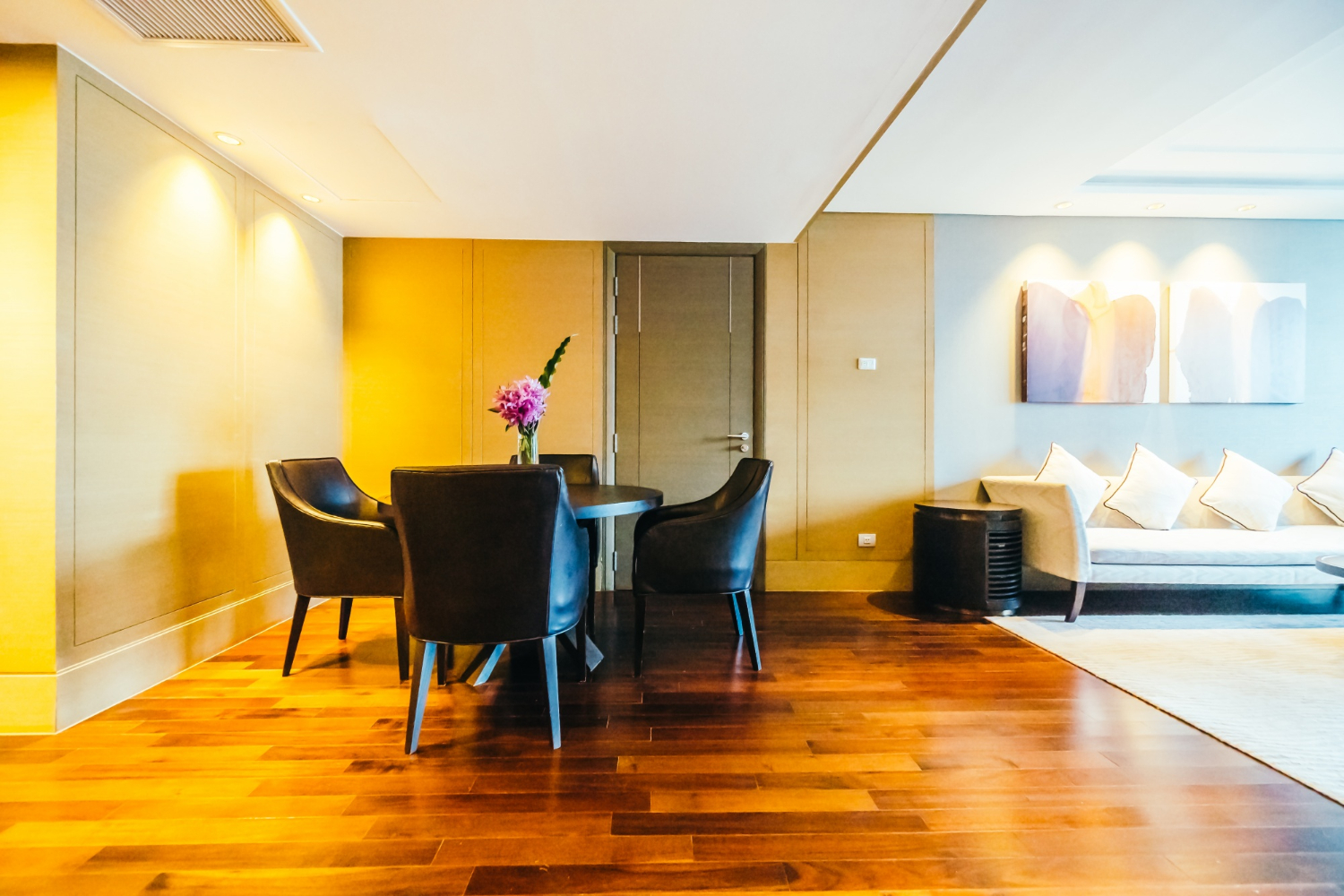
How Can You Create a Basement Bar Floor That Handles Moisture, Spills, and Entertaining?
August 18, 2026A basement bar floor should handle spills, foot traffic and regular cleaning. Luxury vinyl, porcelain tile and certain floor-coating systems may be suitable options, depending on the condition of the concrete slab and the products used.
Before choosing a finish, check for moisture problems and confirm that the flooring is approved for below-grade installation. Even water-resistant flooring can develop installation problems when moisture enters from beneath it.
What makes a basement different from other rooms when choosing flooring?
Basements sit below grade which means they’re exposed to ground moisture that other rooms never deal with. Concrete slabs can wick moisture upward even when the surface looks dry, and that moisture gets trapped under flooring that isn’t built to handle it.
That’s why moisture conditions should be checked before choosing the flooring. A damp slab can affect adhesives, coatings and other installation materials, even when the finished flooring itself resists spills.
What are the best basement bar flooring ideas for moisture resistance?
Several flooring materials may work in a basement bar, provided they’re approved for the space and installed over a suitable subfloor.
- Luxury vinyl plank (LVP): Easy to clean and available in wood-look styles. Check its below-grade approval and moisture requirements.
- Porcelain tile: Durable and resistant to water absorption, although grout and installation materials still need proper care.
- Sheet vinyl: Offers a relatively easy-to-clean surface with fewer seams, depending on the room layout.
- Epoxy floor coatings: Can create a seamless finish when the concrete and coating system meet installation requirements.
- Rubber flooring: May suit a combined bar and game room, but product suitability, appearance and maintenance vary.
Compare the options based on moisture conditions, foot traffic, cleaning needs and comfort underfoot.
Do basement bar floors need a moisture barrier underneath?
Not every basement floor requires the same moisture barrier. The right approach depends on the concrete slab, flooring material and manufacturer’s installation instructions.
Some vinyl flooring systems require an approved vapor retarder over concrete. Other materials may need a specific moisture-control system or surface preparation.
Before installation, check the slab’s moisture levels and address any leaks or water intrusion. A moisture barrier isn’t a substitute for fixing an active moisture problem.
How do you choose flooring that handles spills during entertaining?
Flooring for a basement bar should have a non-porous surface, tight seams, and a slip-resistant texture, since spilled drinks and foot traffic are a given during any gathering. Porous materials like unsealed wood or certain natural stones absorb liquid and stain quickly, which rules them out from most basement bar flooring ideas worth considering.
Luxury vinyl and properly installed tile are practical choices for everyday spills because their surfaces are generally easy to wipe clean. However, water can still reach seams, edges or the subfloor, so spills should be cleaned promptly. Choose a finish with suitable slip resistance, especially around the bar and sink.
For a real project example, take a look at Tammy’s basement bar renovation, which features luxury vinyl and carpet in a finished basement space.
What flooring holds up best under heavy foot traffic and furniture?
Luxury vinyl and porcelain tile can work well in busy basement bars when the products are rated for the expected traffic. For vinyl, compare wear-layer specifications and resistance to scratches and dents. For tile, consider the product’s floor-use rating and surface finish.
Furniture pads help regardless of material choice, since dragging heavy stools or a pool table across any floor can cause wear over time. For basements that double as entertaining spaces with frequent furniture rearranging a scratch-resistant wear layer is worth prioritizing during material selection.
Is it worth spending more on basement bar flooring?
It depends on how often you use the space and what you’re paying for.
For a frequently used basement bar, it may be worth choosing flooring with stronger wear resistance, an appropriate warranty and easier maintenance. A higher price alone doesn’t guarantee a longer lifespan.
Compare product specifications, installation costs and maintenance needs before deciding.
Frequently asked questions
How much does basement bar flooring typically cost?
Costs vary by material, room size, subfloor preparation and installation method. Moisture-control work or concrete repairs can add to the total. Request an estimate based on the basement’s actual conditions.
Can existing basement flooring be replaced without removing the bar?
Sometimes. Flooring can often be installed around fixed bar cabinetry, but the approach depends on the flooring system and how the bar is secured. Floating floors generally shouldn’t be trapped beneath fixed cabinets unless the manufacturer permits it.
What’s the most durable flooring for a basement game and bar room?
Porcelain tile and suitable commercial-grade vinyl are worth considering for heavy traffic. Rubber or resin-based flooring may also be appropriate for certain uses. Compare impact resistance, maintenance and slip resistance before choosing.
How long does basement bar flooring installation take?
Installation time depends on the room size, material, concrete condition and preparation work. Some coatings also require additional curing time. Ask your installer for a schedule based on the selected flooring system.
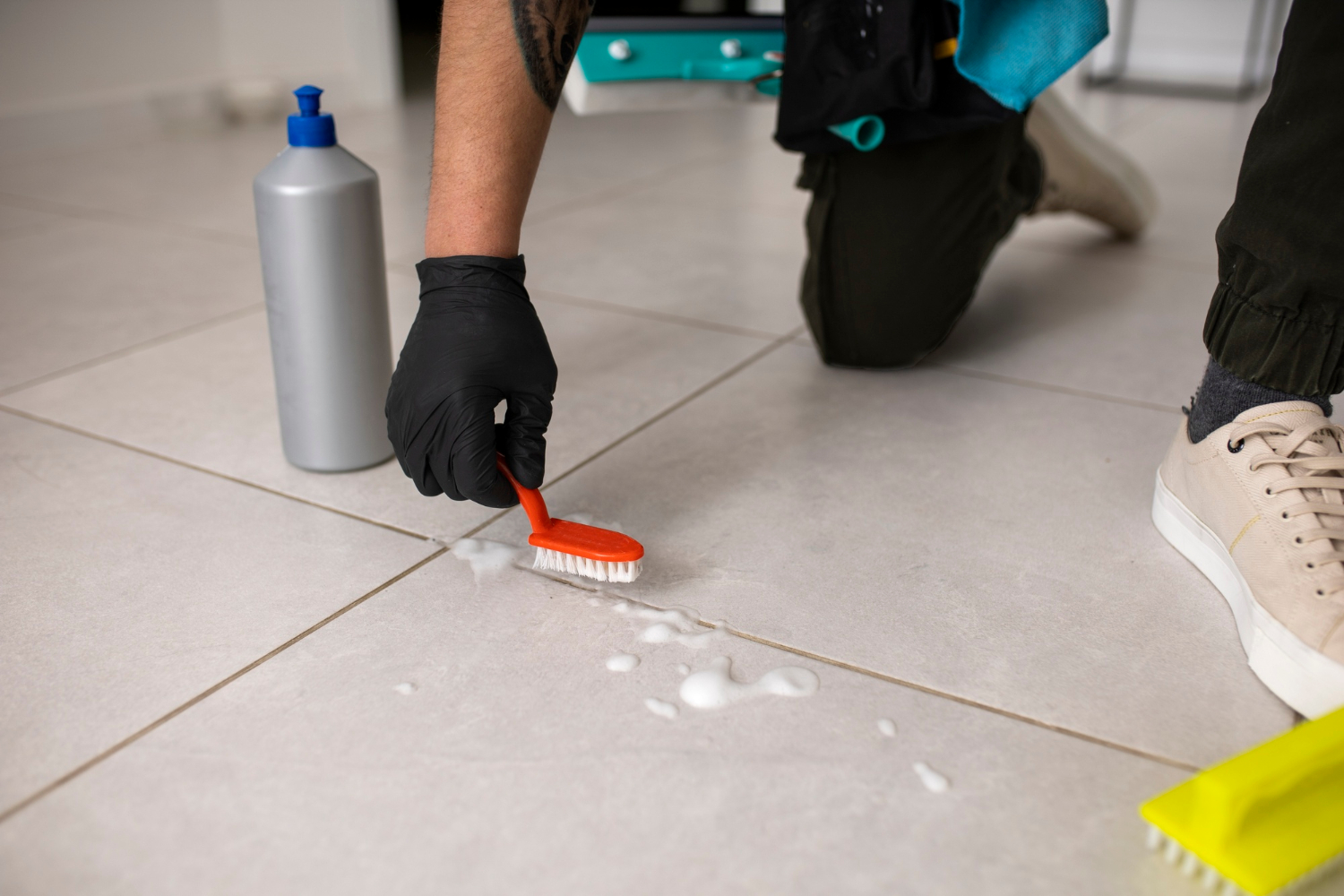
What Should You Know Before Trying to Remove Grout Haze From a Newly Installed Tile Surface?
August 7, 2026Grout haze is the pale, chalky film that can remain on tile after the grout dries. Before you work out how to remove grout haze, take a close look at the tile and grout you have. A method that works on porcelain may not be suitable for natural stone.
Timing matters, too. Haze that’s dealt with at the right stage is usually easier to handle than residue that’s been left to harden. A little care here can save you from damaging a brand-new tile finish.
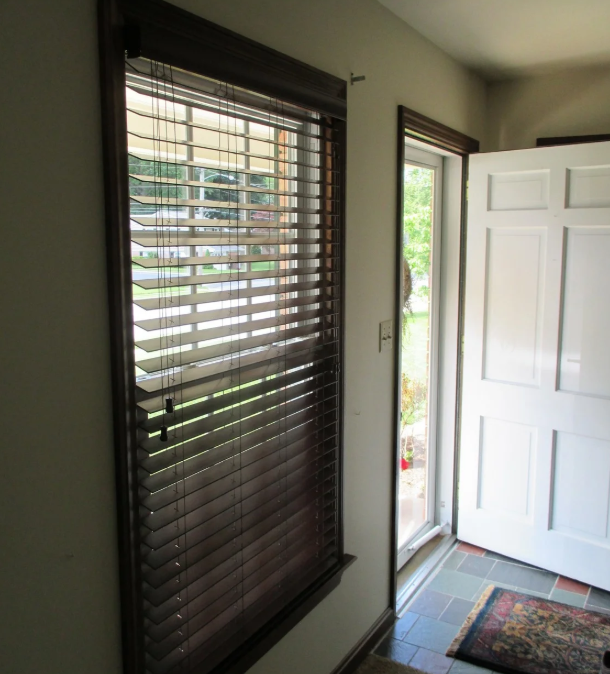
How Do Designers Pair Natural Window Coverings With Modern Flooring for a Cohesive Home?
July 28, 2026Designers pair natural window coverings with modern flooring by paying attention to wood tones, undertones, texture, and natural light, rather than trying to match every finish exactly. That approach creates real visual balance, highlights the architecture of a room, and lets flooring and window treatments play off each other while still fitting the home’s overall style.
Interiors that actually work are built around harmony, not a perfect match. Designers look at the flooring, wall colors, furniture finishes, and how much daylight hits each room before recommending window coverings. When flooring and blinds are treated as part of the same design plan, the result is a space that feels put together, comfortable, and good-looking for years to come.
Which Home Flooring Upgrades Deliver the Strongest Return When It’s Time to Sell?
July 16, 2026Designers pair natural window coverings with modern flooring by paying attention to wood tones, undertones, texture, and natural light, rather than trying to match every finish exactly. That approach creates real visual balance, highlights the architecture of a room, and lets flooring and window treatments play off each other while still fitting the home’s overall style.
Interiors that actually work are built around harmony, not a perfect match. Designers look at the flooring, wall colors, furniture finishes, and how much daylight hits each room before recommending window coverings. When flooring and blinds are treated as part of the same design plan, the result is a space that feels put together, comfortable, and good-looking for years to come.
Why Do Some Carpet Spots Keep Coming Back Even After Cleaning?
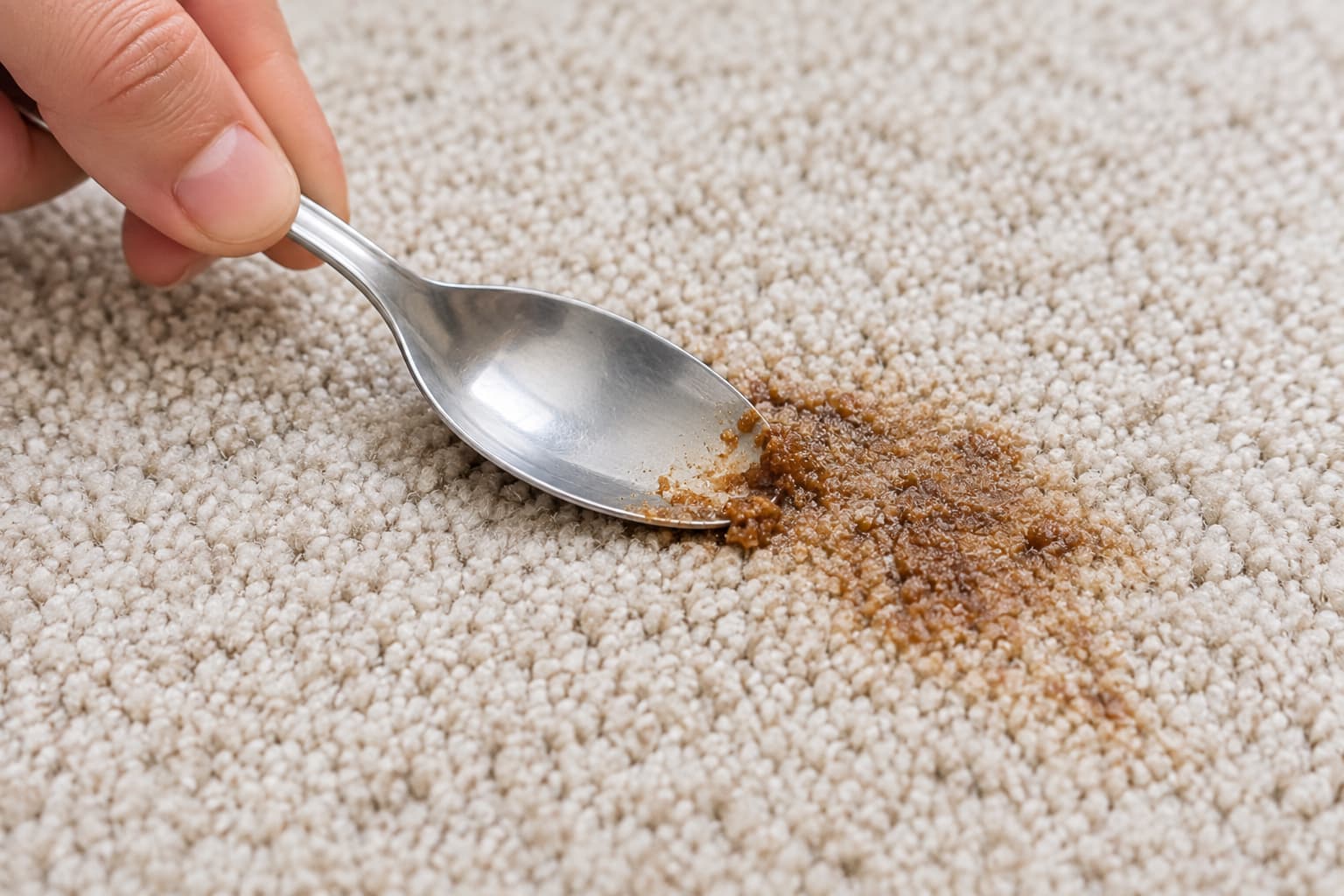
July 7, 2026Some carpet spots come right back after cleaning because the stain never fully leaves, it’s still trapped down in the fibers or the padding underneath. As the carpet dries, whatever moisture and residue are left works its way back up through the fibers, and the spot shows up again. That process is called wicking, and it’s a common reason stains seem to reappear out of nowhere.
Recurring spots can also happen from using too much cleaning solution, which leaves behind a sticky film that attracts dirt. Some spills, coffee, pet accidents, and sugary drinks, soak in deeper than just the surface. Getting rid of both the stain itself and any leftover residue is what actually keeps the spot from coming back once the carpet dries.
- 1
- 1-6 of 6 results