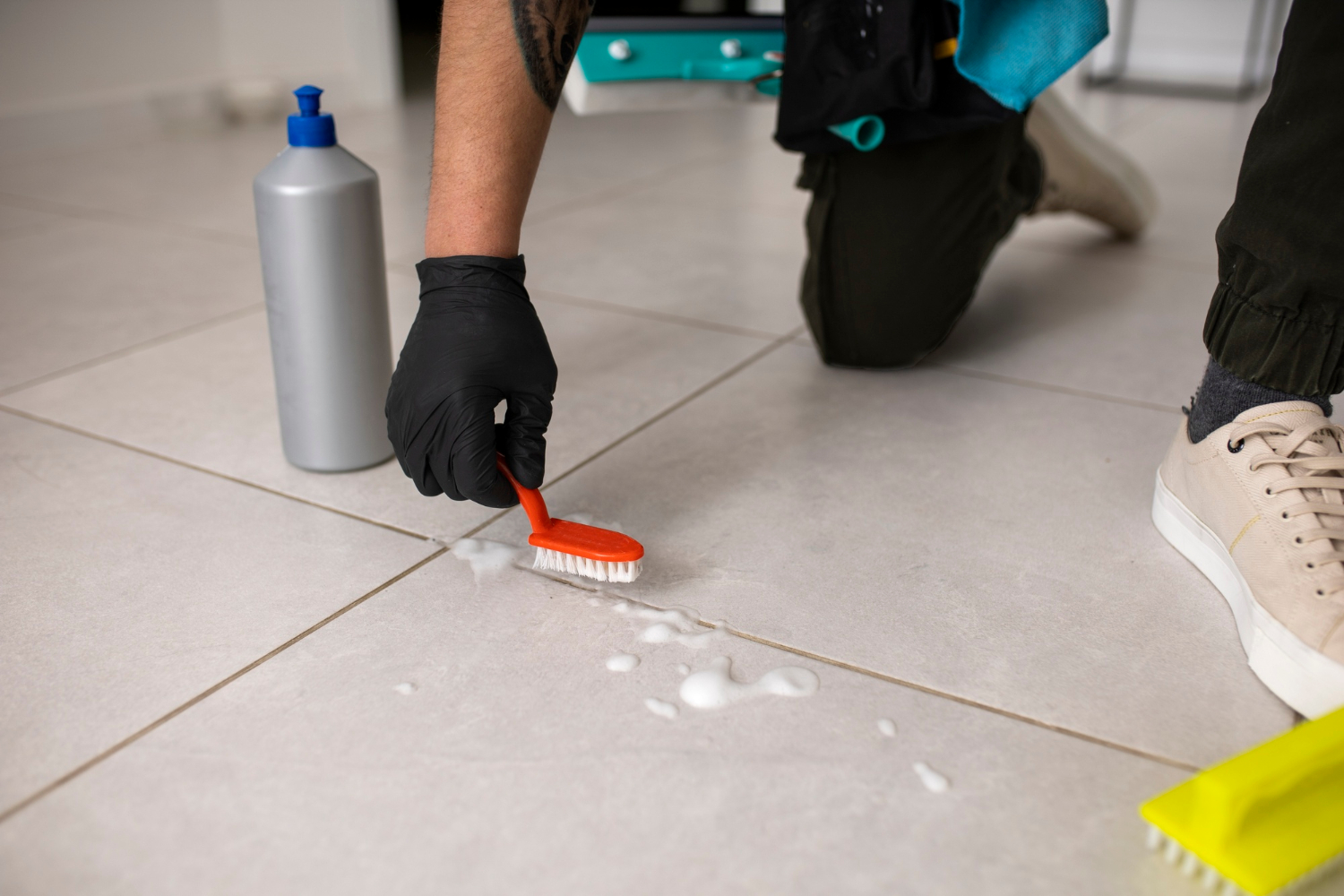
What Should You Know Before Trying to Remove Grout Haze From a Newly Installed Tile Surface?
August 7, 2026Grout haze is the pale, chalky film that can remain on tile after the grout dries. Before you work out how to remove grout haze, take a close look at the tile and grout you have. A method that works on porcelain may not be suitable for natural stone.
Timing matters, too. Haze that’s dealt with at the right stage is usually easier to handle than residue that’s been left to harden. A little care here can save you from damaging a brand-new tile finish.
How Long Should You Wait Before Addressing Grout Haze From New Tile?
There’s no single waiting period that works for every installation. The grout manufacturer’s curing instructions should come first. Cleaning too soon can disturb the joints, while leaving residue for too long can make it harder to deal with.
Don’t rely only on a set number of hours. Check that the grout has set properly and follow the product instructions before cleaning the surrounding tile. If you’re unsure, ask the installer. That’s usually easier than fixing a problem caused by cleaning too early.
Fresh haze is generally easier to address than residue that’s been sitting for a long time. So once the grout is ready, there’s little reason to put the cleanup off.
Does Grout Haze Go Away on Its Own?
No. Grout haze doesn’t normally disappear just because the tile is walked on or mopped during regular cleaning.
Light residue may become less noticeable after routine cleaning but the film itself can remain. If the tile still looks cloudy after the grout has cured, it needs to be treated as grout residue rather than ordinary dust or dirt.
What Should You Consider Before Removing Grout Haze From Tile?
Start by figuring out what you’re working with. The cleaning method needs to suit the installation.
- Tile material: Ceramic and porcelain can handle products that aren’t appropriate for some natural stones.
- Grout type: Cement-based and epoxy grout can leave different types of residue.
- Surface finish: A polished surface may need more care than a tougher glazed finish.
- Age of the haze: Fresh residue is usually easier to deal with than hardened buildup.
- Product instructions: Tile and grout manufacturers may list cleaners that are safe for the specific installation.
A stronger cleaner or abrasive tool isn’t always the right solution. Some methods used to remove hardened grout deposits can damage delicate tile finishes. Check the tile and grout manufacturers’ cleaning instructions before choosing a product or tool.
Can Vinegar Damage Tile or Grout When Addressing Haze?
Vinegar and other acidic cleaners aren’t suitable for every tile or grout. They can etch natural stone, including marble, travertine, and limestone, and may damage cement-based grout if used incorrectly.
Some grout haze removers are formulated for specific tile and grout combinations, but that doesn’t mean household cleaners are suitable substitutes. Products such as Windex or Clorox wipes shouldn’t be used for grout haze removal unless the tile and grout manufacturers confirm they’re appropriate.
Before using any cleaner, check the product instructions and test it in a small, inconspicuous area.
Why Does Grout Haze Become More Difficult to Address Over Time?
Grout haze can become harder to clean as the residue cures and bonds more firmly to the tile. What looks like a thin, harmless film at first can become much more stubborn after it has been left for an extended period.
That doesn’t mean you should jump straight to a stronger chemical or abrasive cleaner. Those methods can create their own problems, especially on delicate finishes. The age of the haze needs to be considered along with the material underneath it.
If the residue has been there for a while, getting advice before trying increasingly aggressive products can be the safer choice.
Is Grout Haze Removal Different for Porcelain vs Natural Stone?
Yes. Porcelain and ceramic tile generally tolerate a wider range of cleaning products than natural stone, although the particular finish still matters.
Natural stone needs more care because many types are sensitive to acids. A cleaner that’s fine for porcelain can cause etching or a loss of sheen on stone.
Matte and textured tiles can be tricky in a different way. Residue can settle into small surface variations and may take more care to remove. Before cleaning either material, identify the tile and check its care requirements.
What Happens If Grout Haze Is Never Addressed?
If grout haze is left behind, the tile can continue to look cloudy or unfinished even after the grout itself has cured. Over time, the residue can also become more difficult to clean.
That doesn’t mean an older haze automatically calls for tile replacement. But trying random, increasingly harsh cleaners isn’t a good way to find out what works. You could end up scratching the tile or damaging its finish.
For older haze, natural stone, or an installation where you’re unsure about the materials, it’s better to have the surface assessed before doing anything aggressive. At Elizabethtown Flooring, we can help determine what you’re dealing with and what type of cleaning approach is appropriate.
Frequently Asked Questions
How to remove grout haze without damaging the tile?
It depends on the tile material, grout type, finish, and age of the haze. Don’t assume a method that’s safe for porcelain will also be safe for natural stone.
Is grout haze the same as hard water stains?
No. Grout haze comes from the grouting process, and usually appears after installation. Hard water stains develop from mineral deposits over time, so they’re a different cleaning problem.
Can I use abrasive materials to remove grout haze?
It depends on the tile surface and the type of residue. Hardened grout deposits may require a different removal method than a thin film of haze, but wire brushes, metal putty knives, and other abrasive tools can scratch or damage certain tile finishes. Use only tools approved by the tile manufacturer, and avoid scraping or aggressive scrubbing without confirming that the method is safe.
Does sealing tile before grouting prevent haze?
Sealing certain porous materials before grouting can reduce how easily grout residue sticks to the surface. It won’t guarantee a haze-free installation, though, and not every tile should be sealed.
Will grout haze remover work on epoxy grout?
Not always. Epoxy residue behaves differently from cement-based grout so the product needs to be compatible with both the grout and the tile. Follow the manufacturer’s directions rather than assuming a standard haze remover will work.
When should I call a professional for grout haze?
Consider getting professional help if the haze is heavily cured, the tile is natural stone, the grout type isn’t clear or previous cleaning attempts haven’t worked. An assessment can help prevent a cleaning attempt from damaging the finished surface.